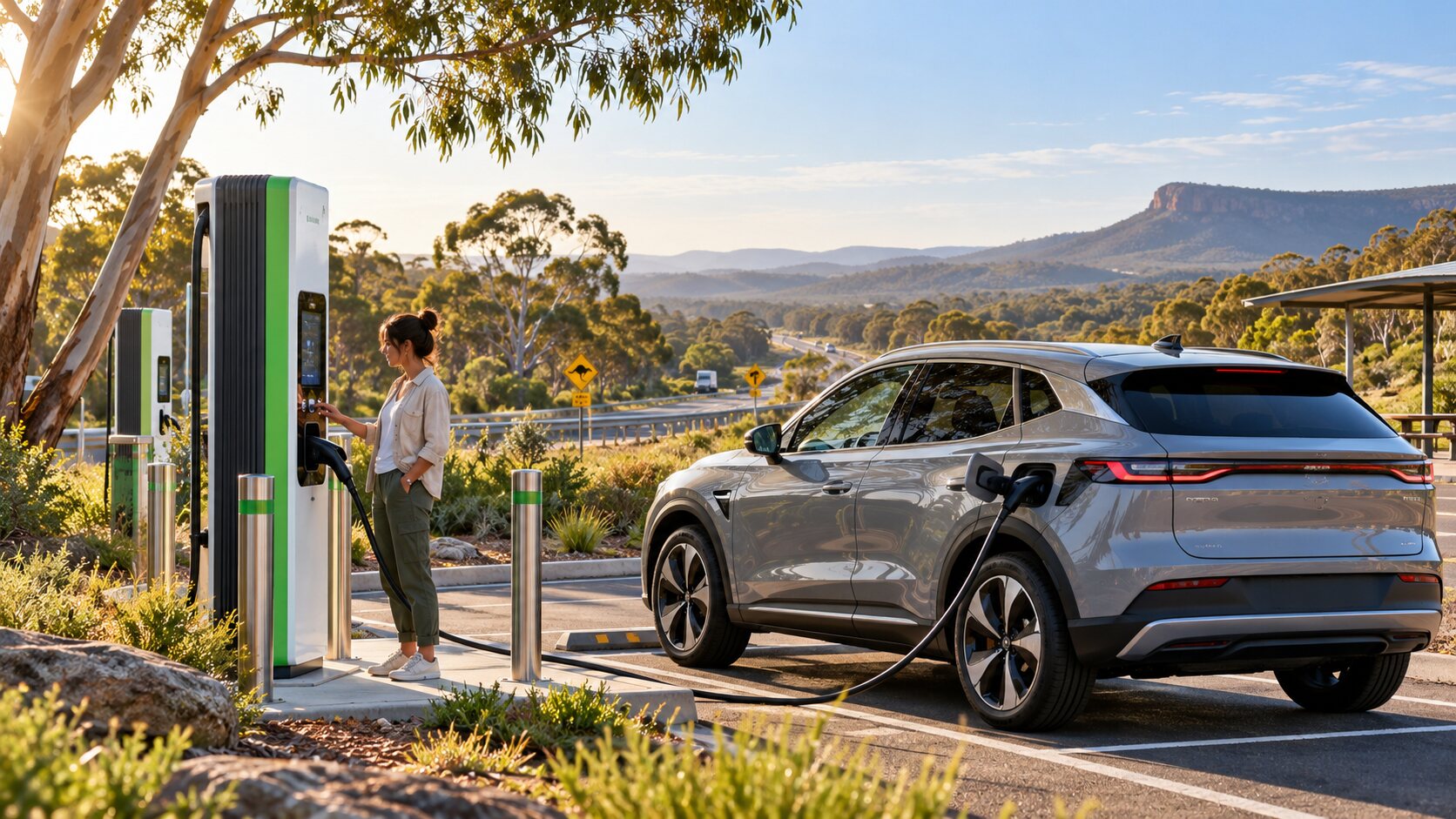
More neighbourhood charging could make EV ownership easier for Australians without a driveway. But a charger only helps if you can park beside it and start a session when you need to.
What is in the news today?
An ABC report published on 2 November examines the risk of kerbside chargers being blocked by parked vehicles. It describes low use at some chargers without dedicated bays and raises questions about access as the network expands. It does not establish that every proposed charger will be inaccessible.
A rollout still moving through its rules
The federal Accelerating EV Charging Program targets kerbside locations and regional blackspots. The Australian Energy Market Commission’s September draft describes approximately 14,000 chargers under the program. As checked on 2 November, its consultation closes on 5 November 2026, with a final determination expected by year-end. This is a planned rollout, not 14,000 additional chargers already operating.
The department’s program guidance says not every adjacent space is expected to be reserved for EVs. Its site requirements include legal parking, usable access and avoiding cable hazards or accessibility problems. Those design requirements are useful context; they do not guarantee that a particular bay will be vacant.
Our checklist before relying on a nearby charger
- Visit at your normal charging time. A quiet weekday morning may tell you little about availability after work. Repeat the visit before making a purchase decision.
- Read the parking signs. Check the allowed duration and any time-specific restrictions. Do not assume a charger symbol gives you permission to park indefinitely.
- Check the physical connection. Look at your car’s charge-port location, the cable arrangement and whether you can connect without obstructing pedestrians or the road.
- Check how you pay and start. Read the operator’s instructions, current tariff and any extra charges. Try a session before making the location your regular plan.
- Identify a realistic backup. Choose another location you could use if the bay is occupied or equipment is unavailable. Factor the extra travel and time into your routine.
Assess access alongside the car
Our advice is to build a weekly charging plan before choosing a battery size. Record your usual travel, where the car is parked and the periods when charging would fit naturally. Include a busy-week scenario rather than designing only for an ideal week.
For a renter or apartment resident, the right comparison is the complete routine: vehicle, charging access, time and cost. If a proposed charger would transform that routine, wait until it is operating and you have checked its arrangements before depending on it.
Read our guide to EV ownership without a home charger for the broader planning process, or our public-charging guide for networks and trip preparation. The useful question is how dependable your own charging options are, rather than simply how many pins appear on a map.
Sources and methodology
EV Matchup prioritises Australian manufacturer pages and government resources. Editorial recommendations are our own.